How Much Does Carpet Repair Cost? Average Pricing & Common Repairs

Carpet can make a room feel comfortable and complete, but everyday use can eventually leave its mark. Loose edges, wrinkles, burns, holes, stains, and damaged seams are common problems in busy homes. When this happens, many homeowners immediately wonder whether they need to replace the entire carpet or if the damaged area can simply be repaired.
So, how much does carpet repair cost? There is no single answer because the cost depends on the type of carpet damage, the size of the affected area, the repair method, and the condition of the surrounding carpet.
In many situations, professional carpet repair can restore a damaged section without replacing the entire floor. Understanding the common repair options can help you decide what your carpet actually needs.
What Affects Carpet Repair Cost?
Several factors can influence the overall cost of carpet repair. A professional will normally assess the carpet before recommending a repair method.
Type of Carpet Damage
Different carpet problems require different techniques. Repairing a loose seam is not the same as fixing a burn or stretching a wrinkled carpet.
Common carpet repair services include:
- Carpet stretching
- Carpet patching
- Seam repair
- Burn repair
- Hole and tear repair
- Pet damage repair
- Carpet edge repair
- Carpet padding repair
The repair method, tools required, and time involved can all affect the final cost.
Size of the Damaged Area
The size of the affected section also matters. A small localised repair may be relatively straightforward, while larger damage can require more preparation and replacement material.
For example, a small burn or hole may be repaired with a carpet patch. If the damage covers a large section or appears in several areas, a more extensive assessment may be necessary.
Carpet Type and Condition
Not every carpet can be repaired in exactly the same way. Fibre type, pile, texture, colour, pattern, and backing can all affect the repair process.
The overall condition of the carpet is important as well. If the surrounding carpet is heavily worn or deteriorating, repairing one small section may not provide a long-term solution.
Availability of Matching Carpet
A successful carpet patch should blend as naturally as possible with the existing carpet. If leftover carpet from the original installation is available, it can be useful for repairing damaged areas.
In some cases, a suitable piece may be taken from a less noticeable area, such as a closet. The availability of a close match can affect both the repair process and the final appearance.
Common Types of Carpet Repairs
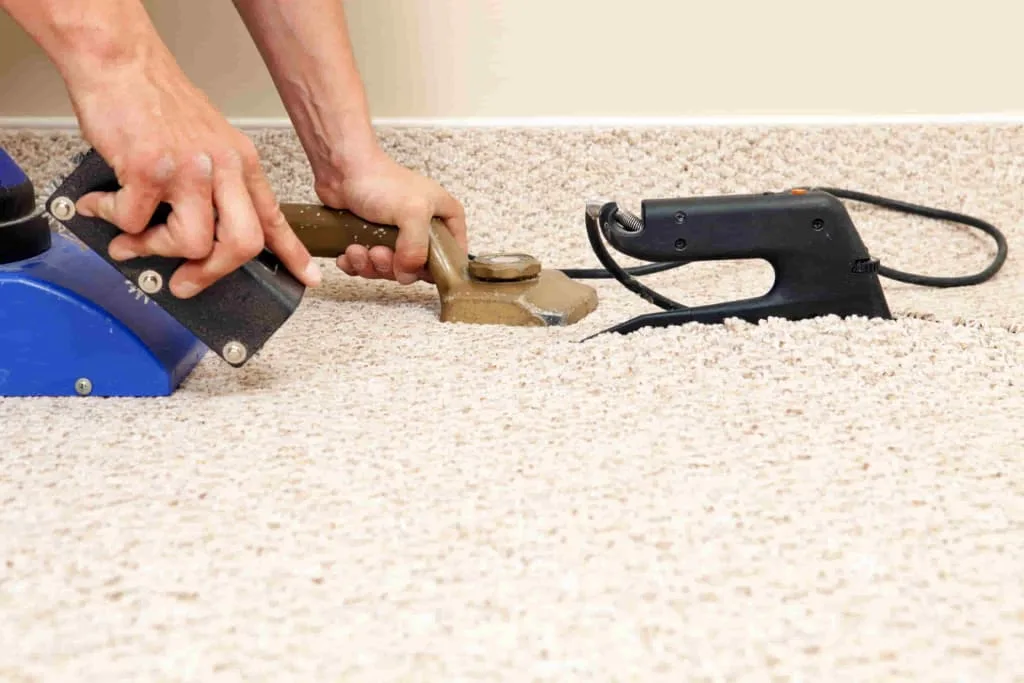
Knowing the type of damage you have is the first step toward understanding what kind of carpet repair may be required.
1. Carpet Stretching
Wrinkled, loose, or rippled carpet is often a sign that the carpet has lost its proper tension.
This can happen because of:
- Improper installation
- Heavy foot traffic
- Furniture movement
- Age
- Changes in indoor conditions
- Carpet becoming loose from its original attachment
Professional carpet stretching can restore tension and help the carpet sit flat again.
Ignoring wrinkles for too long can also create a tripping hazard and may cause additional wear in raised areas.
2. Carpet Patching
Carpet patching is commonly used for small areas of localised damage.
It may be suitable for:
- Burns
- Holes
- Small tears
- Permanent stains
- Pet damage
- Severely worn spots
During a carpet patch repair, the damaged section is removed and replaced with a suitable piece of carpet. The replacement needs to be positioned carefully so that the pile direction and texture blend with the surrounding area.
3. Carpet Seam Repair
A seam is where two pieces of carpet meet. Over time, seams can become loose, separate, or begin to fray.
You may notice a seam problem when:
- Two carpet sections start pulling apart
- The edge of a carpet section becomes visible
- The seam begins to lift
- Fibres start fraying around the joint
Professional seam repair can help reconnect and secure the affected sections before the damage spreads.
4. Carpet Burn Repair
Small carpet burns can occur from hot objects, embers, or accidental heat exposure.
If the damage is localised, a professional may be able to remove the affected fibres and replace the section with matching carpet.
The success of a burn repair depends heavily on the size and location of the damage and whether suitable replacement carpet is available.
5. Carpet Tear and Hole Repair
Carpet can tear because of furniture movement, sharp objects, pets, or general wear.
Small tears and holes can sometimes be repaired without replacing the surrounding carpet. However, larger tears may require a more detailed repair depending on the condition of the carpet backing.
Addressing tears early can help prevent them from becoming larger.
6. Pet Damage Repair
Pets can cause several types of carpet damage, including scratching, chewing, pulling, staining, and damaged edges.
If the affected area is relatively small, carpet patching may be an option. More extensive pet damage may require replacement of part of the carpet or padding.
When Should You Repair Carpet Instead of Replacing It?
Carpet repair can make sense when the damage is limited and the rest of the carpet remains in good condition.
Repair may be worth considering when:
- Damage is limited to one area
- The carpet still looks good overall
- The carpet fibres are not extensively worn
- Only a seam has become loose
- The carpet has developed wrinkles
- There is a small burn, hole, or tear
- Matching carpet is available
On the other hand, complete carpet replacement may be more practical when the carpet has widespread damage, extensive wear, persistent odours, serious water damage, or problems across multiple rooms.
A professional assessment can help determine whether repair or replacement is the more practical option.
Can Carpet Wrinkles Be Repaired?
Yes, many carpet wrinkles and ripples can be addressed through professional carpet stretching.
Loose carpet should not simply be pulled by hand or cut without understanding why it has become loose. Professional carpet repair technicians use appropriate equipment to restore tension and secure the carpet correctly.
If the carpet is otherwise in good condition, stretching can improve both its appearance and usability.
Can a Burnt Carpet Be Repaired?
A small burnt area does not necessarily mean the entire carpet needs to be replaced.
If the damage is localised, a carpet repair professional may be able to remove the burnt section and install a matching piece.
The result depends on the carpet's colour, texture, pattern, and pile and the availability of suitable replacement material.
Is DIY Carpet Repair a Good Idea?
Some minor carpet problems may look easy to fix, but professional repair can be more complicated than it appears.
For example, carpet stretching requires the right equipment and technique. Incorrect stretching can leave the carpet uneven or potentially cause additional damage.
Similarly, a poorly installed patch can be noticeable, especially in the centre of a room or another highly visible area.
For valuable, heavily used, or significantly damaged carpet, professional assessment is generally the safer approach.
How Can You Prevent Carpet Damage?
Regular care can help reduce unnecessary carpet repairs.
Vacuum Regularly
Dirt and debris can work into carpet fibres and contribute to gradual wear. Regular vacuuming helps keep the carpet cleaner and reduces the buildup of abrasive particles.
Move Furniture Carefully
Dragging heavy furniture across carpet can pull fibres, damage the backing, or contribute to stretching.
Clean Spills Promptly
Quick action after a spill can reduce the chance of permanent staining.
Keep an Eye on Loose Areas
If you notice a carpet edge lifting, a seam separating, or wrinkles developing, addressing the problem early may prevent further damage.
Arrange Professional Carpet Cleaning
Regular professional carpet cleaning can help maintain the appearance of your carpet and remove accumulated dirt that normal vacuuming may not fully remove.
How Do You Know Which Carpet Repair You Need?
| The visible problem can often provide a starting point: | |
| Wrinkled carpet | Carpet stretching |
| Small hole | Carpet patching |
| Burn mark | Carpet patching or burn repair |
| Loose seam | Seam repair |
| Torn carpet | Carpet patching or localised repair |
| Pet damage | Carpet patching or section repair |
| Frayed edge | Edge repair |
| Loose carpet | Re-stretching or re-securing |
| Damaged padding | Padding repair or replacement |
However, the visible damage does not always tell the whole story. A professional inspection can identify whether the carpet backing, padding, attachment points, or surrounding area has also been affected.
Final Thoughts
The answer to “how much does carpet repair cost?” depends on the repair your carpet needs. Carpet stretching, patching, seam repair, burn repair, and pet damage repair all involve different levels of work.
Before deciding to replace your carpet, it is worth finding out whether the damage can be repaired. If the rest of the carpet is still in good condition, a targeted repair may restore the damaged area and help extend the life of your flooring.
If you are unsure whether your carpet needs repair, stretching, patching, or replacement, a professional carpet assessment can help you choose the most suitable option.