How to Unclog a Toilet and Fix Common Flushing Problems

A toilet that won't flush properly can quickly turn into a frustrating household problem. Sometimes the cause is a simple clog, while other times the issue may be related to the tank, flush mechanism, or drainage system.
Before reaching for harsh chemicals or repeatedly flushing the toilet, it's helpful to understand what's actually causing the problem. In many cases, a few simple steps can solve a minor issue and prevent it from happening again.
This guide explains how to unclog a toilet, what can cause flushing problems, how to fix a running toilet, and when it's time to get professional plumbing help.
Why Is My Toilet Not Flushing Properly?
A toilet may fail to flush properly for several reasons. A clog is one of the most common, but it isn't the only possibility.
Some common causes include:
- A partially or completely clogged toilet
- Low water in the toilet tank
- A faulty flapper valve
- A loose or damaged flush handle
- A problem with the fill valve
- Mineral buildup around the flush holes
- A blockage deeper in the drain line
If the bowl fills with water when you flush and drains very slowly, there is a good chance that a blockage is restricting the flow.
If the bowl doesn't fill properly and the flush is weak, the problem may be inside the tank rather than the drain.
How to Unclog a Toilet
If the toilet is clogged, don't keep flushing it. Repeated flushing can cause the bowl to overflow and turn a small problem into a much bigger mess.
Try these steps instead.
1. Use a Toilet Plunger
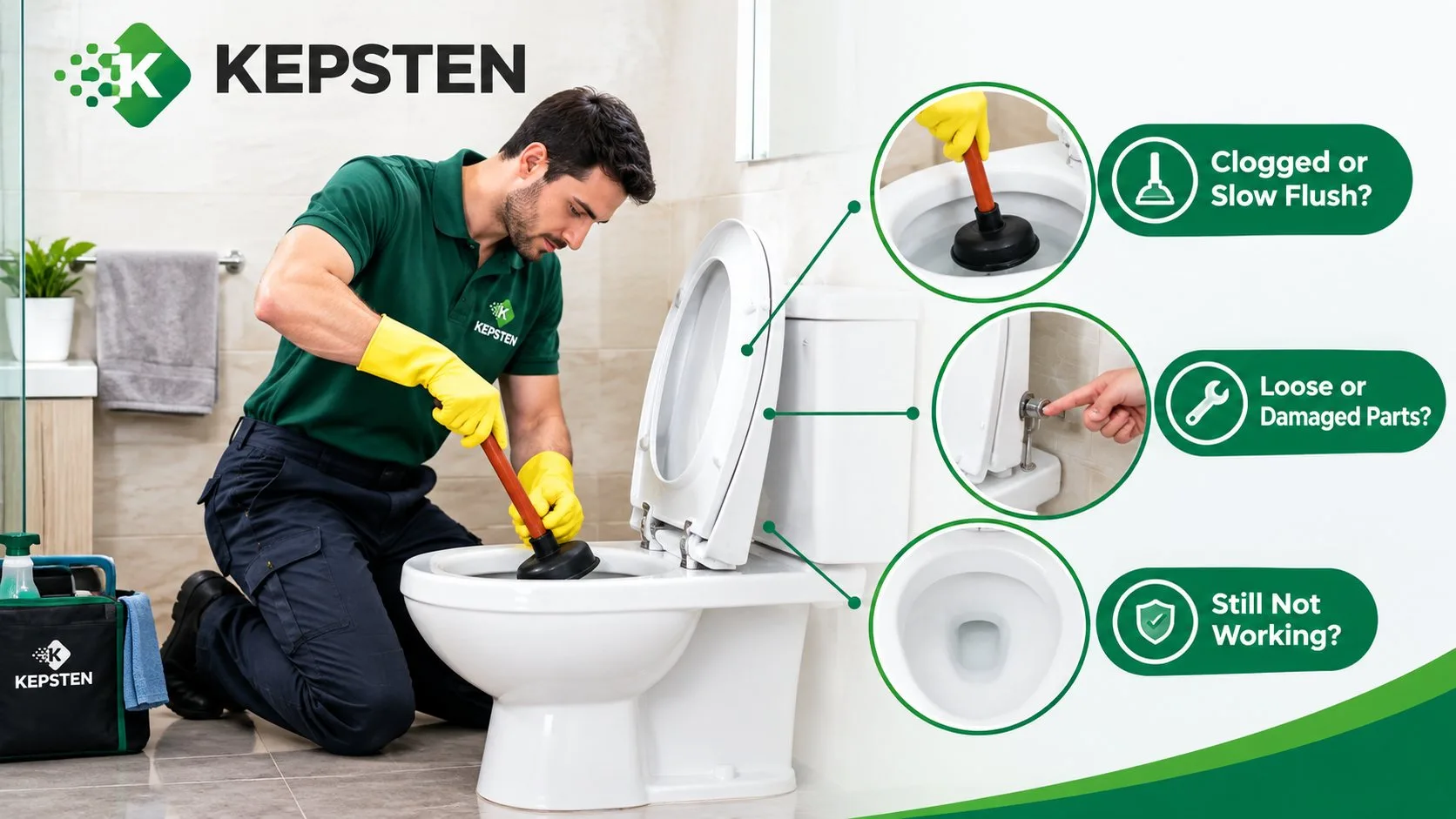
A toilet plunger is usually the best first option for a typical clog.
Place the rubber cup over the toilet drain and create a tight seal. Push down gently and then pull up firmly. Repeat the motion several times.
After a few attempts, remove the plunger and wait to see whether the water begins to drain.
If the water level returns to normal, try one careful flush.
2. Try Warm Water and Dish Soap
For a minor blockage, dish soap and warm water may help loosen material inside the toilet.
Add a small amount of dish soap to the bowl and carefully pour in warm water.
Avoid boiling water. Extremely hot water can potentially damage the toilet or plumbing components.
Give it some time before trying the plunger again.
3. Use a Toilet Auger
If the plunger doesn't work, a toilet auger can reach deeper into the toilet trap.
Insert the auger carefully and follow the manufacturer's instructions. Turn it slowly rather than forcing it through the blockage.
A toilet auger is particularly useful when the clog is too deep for a plunger to reach.
4. Don't Use Harsh Chemicals
Chemical drain cleaners aren't usually the best solution for a toilet clog.
They can be hazardous to handle and may damage certain plumbing components. They can also create a safety problem if you later need to use a plunger or auger.
Mechanical methods are generally a better starting point.
Why Does My Toilet Keep Clogging?
If your toilet becomes clogged repeatedly, there may be an underlying problem rather than a series of unrelated clogs.
Common causes include:
- Flushing too much toilet paper
- Flushing wipes or other unsuitable materials
- A partially blocked toilet trap
- Low water levels in the tank
- Poor drainage
- A blockage farther down the drain line
- Problems with the sewer line
If the same toilet keeps clogging shortly after being cleared, it's worth finding out why instead of repeatedly removing the blockage.
How to Fix a Running Toilet
A running toilet is another common flushing problem.
If you can hear water continuously running after the toilet has finished flushing, water may be leaking from the tank into the bowl.
Check the flapper.
The flapper is responsible for releasing water from the tank into the bowl when you flush.
If it doesn't seal properly, water can continue flowing into the bowl.
Open the tank and check whether the flapper closes completely. If it is worn, damaged, or doesn't seal properly, replacing it may solve the problem.
Check the Flush Chain
A chain connects the flush handle to the flapper.
If the chain is tangled or too tight, it may prevent the flapper from closing correctly.
Make sure the chain has enough slack for the flapper to close fully.
Check the Water Level
Look at the water level inside the tank.
If water is rising too high and entering the overflow tube, the fill valve or its adjustment may need attention.
Follow the toilet manufacturer's recommended water level rather than setting it too high.
What If the Toilet Has a Weak Flush?
A toilet can sometimes flush but still have a weak flush.
Possible causes include:
- Low tank water level
- Mineral buildup
- Partially blocked flush holes
- A developing clog
- Problems with the flush valve
If the toilet has always had a weak flush, the toilet design or water level may be a factor. If the flushing performance has recently changed, look for a developing plumbing problem.
How to Prevent Toilet Clogs
Preventing a clog is much easier than dealing with an overflowing toilet.
Flush Only Appropriate Materials
Toilets should generally be used for human waste and toilet paper.
Avoid flushing:
- Paper towels
- Baby wipes
- Cleaning wipes
- Cotton products
- Dental floss
- Feminine hygiene products
- Other household materials
Even products labelled as flushable can cause problems in some plumbing systems.
Avoid Excessive Toilet Paper
Using more toilet paper than necessary can increase the chance of a blockage, particularly in older plumbing systems.
Don't Ignore Slow Flushing
If your toilet starts flushing more slowly than usual, don't ignore the change.
It could be an early sign of a partial blockage or another plumbing issue.
When Should You Call a Plumber?
Some toilet problems are simple enough to handle yourself, but recurring or more serious problems may require professional attention.
Consider calling a plumber if:
- The toilet keeps clogging
- A plunger and toilet auger don't clear the blockage
- Multiple drains are backing up
- Water backs up into another fixture
- The toilet leaks around its base
- You suspect a sewer line blockage
- The toilet continues running after basic adjustments
- The problem keeps returning
Multiple plumbing fixtures experiencing problems at the same time can be a sign that the issue is farther down the drainage system.
If you're unable to identify the cause or the problem continues, a qualified plumbing professional such as Kepsten can help inspect the system and determine the appropriate repair.
Final Thoughts
Learning how to unclog a toilet can help you deal with a minor blockage before it becomes a bigger plumbing problem. In many cases, a toilet plunger is the best place to start, while a toilet auger can help with more stubborn clogs.
If your toilet won't flush properly, keeps running, or repeatedly becomes clogged, don't just keep treating the same symptom. Identifying the underlying cause can help prevent recurring problems and protect your plumbing system.