The Hidden Dangers of a Faulty Toilet: When to Repair or Replace

A toilet is something most people use every day without giving much thought to how well it is working. But small warning signs, such as a toilet that keeps running, flushes poorly, clogs regularly, or leaks around the base, can sometimes point to a bigger plumbing issue.
Ignoring these problems may lead to wasted water, higher utility bills, damaged flooring, unpleasant odors, and more serious plumbing concerns. Knowing the difference between a problem that can be repaired and one that calls for a replacement can help you avoid unnecessary costs.
At Kepsten, we help homeowners and property owners identify toilet issues and choose practical plumbing solutions. Whether your toilet needs a simple repair or is ready for an upgrade, professional assessment can help determine the most suitable option.
If you are unsure about toilet repair vs. replacement, the condition, age, and performance of the fixture are important factors to consider.
What Can Happen When a Toilet Problem Is Ignored?
A toilet issue may start as a small inconvenience, but leaving it unresolved can create additional problems around your property.
Wasted Water and Higher Bills
A toilet that continues running after every flush may be losing water continuously. A worn flapper, faulty fill valve, or damaged internal component can allow water to keep flowing into the bowl.
Although the amount of water wasted during one flush may seem insignificant, a constantly running toilet can add up over time. Addressing the problem early can help prevent unnecessary water consumption and expenses.
Damage to Flooring and Surrounding Areas
Leaks are another problem that should not be overlooked. Water escaping from the tank, supply connection, or base can gradually affect the flooring around the toilet.
If moisture remains hidden for an extended period, it can damage surrounding materials and create conditions that encourage mold and mildew growth.
Drainage and Sewage Issues
A toilet that repeatedly clogs may have an underlying blockage or drainage problem. If the issue is not addressed, a serious blockage can eventually result in wastewater backing up into the bathroom.
Repeated clogging should therefore be investigated instead of being treated as an occasional inconvenience.
Unpleasant Bathroom Odours
A persistent smell around the toilet can also indicate a plumbing problem. A damaged seal, hidden leak, or drainage issue may allow unpleasant odors to enter the bathroom.
If cleaning does not resolve the smell, it is worth checking whether the toilet or surrounding plumbing is responsible.
What Are the Signs Your Toilet Needs Repair?
Not every toilet problem means you need a new fixture. Many common issues can be resolved by repairing or replacing an individual component.
Constant Running
A toilet that keeps running after flushing commonly has an issue with the flapper, fill valve, float, or another internal part.
In many cases, replacing the faulty component is enough to restore normal operation. There is usually no reason to replace an otherwise sound toilet simply because one small part has failed.
Poor Flushing Performance
A toilet that does not flush properly can be frustrating and may contribute to repeated blockages.
Mineral buildup, a partial obstruction, low tank water levels, or a worn flushing mechanism can affect performance. Identifying the actual cause is important before deciding whether the fixture itself needs replacing.
Repeated Clogging
An occasional clog is relatively common, but frequent blockages can indicate a deeper issue.
If plunging only solves the problem temporarily, there may be an obstruction, drainage issue, or flushing problem that needs professional attention.
Worn or Damaged Components
Toilet handles, valves, bolts, flappers, and other parts can deteriorate with age. These components can often be replaced individually, allowing the toilet to continue working properly without the expense of a complete replacement.
Why Is My Toilet Constantly Running?
If you have noticed that your toilet continues running long after you flush it, the problem is usually related to the tank mechanism.
Common causes include:
- A worn flapper
- A faulty fill valve
- An incorrectly adjusted float
- A damaged flush valve
- Water entering the bowl continuously
The good news is that this problem is often relatively simple to repair. A plumber can identify the faulty component and replace it without removing the entire toilet.
However, if an older toilet has developed several problems at the same time, replacing it may make more sense than continuing to repair individual parts.
How Can You Fix a Weak Toilet Flush?
A weak flush can have several causes, so there is no single solution for every toilet.
Mineral deposits can restrict water flow, while a low tank water level or damaged flushing mechanism can reduce the toilet's performance. A partial blockage can also make the flush appear weaker than normal.
If you are wondering how to fix a weak toilet flush, start by identifying the underlying cause. Cleaning or adjusting the mechanism may solve the problem, while a worn component may simply need to be replaced.
If the toilet is old and continues to perform poorly despite repairs, upgrading to a newer model may provide a more reliable solution.
When Should You Replace a Toilet?
Knowing when to replace a toilet is important because continuing to repair an aging fixture is not always the most economical choice.
Cracks in the Tank or Bowl
Cracks in porcelain are a serious warning sign. Even a small crack can become worse and eventually result in a substantial leak.
Because structural damage cannot normally be repaired reliably for long-term use, replacing a cracked toilet is generally the safer option.
Frequent Repairs
If the same toilet repeatedly needs new components or repairs, maintenance costs can start adding up.
A single inexpensive repair may be worthwhile, but several major repairs over a short period can make replacement a more sensible investment.
Significant Leaks
A leaking seal may be relatively simple to repair. However, if the toilet itself is damaged or the surrounding area has suffered considerable water damage, replacement may be necessary.
Poor Performance Despite Repairs
Sometimes a toilet continues to flush poorly or clog even after several repairs. When the underlying fixture is old and inefficient, installing a new toilet may provide better long-term performance.
How Long Does a Toilet Last?
Many toilets can remain functional for many years, but their useful life depends on factors such as quality, usage, maintenance, water conditions, and the condition of internal components.
Age alone does not necessarily mean a toilet needs replacing. A well-maintained older toilet may continue working effectively, while a newer fixture with structural damage may need immediate replacement.
Instead of focusing only on age, consider the toilet's overall condition. If it is becoming increasingly inefficient, requires frequent repairs, or has developed significant damage, replacement may be worth considering.
Toilet Repair vs Replacement: How Do You Decide?
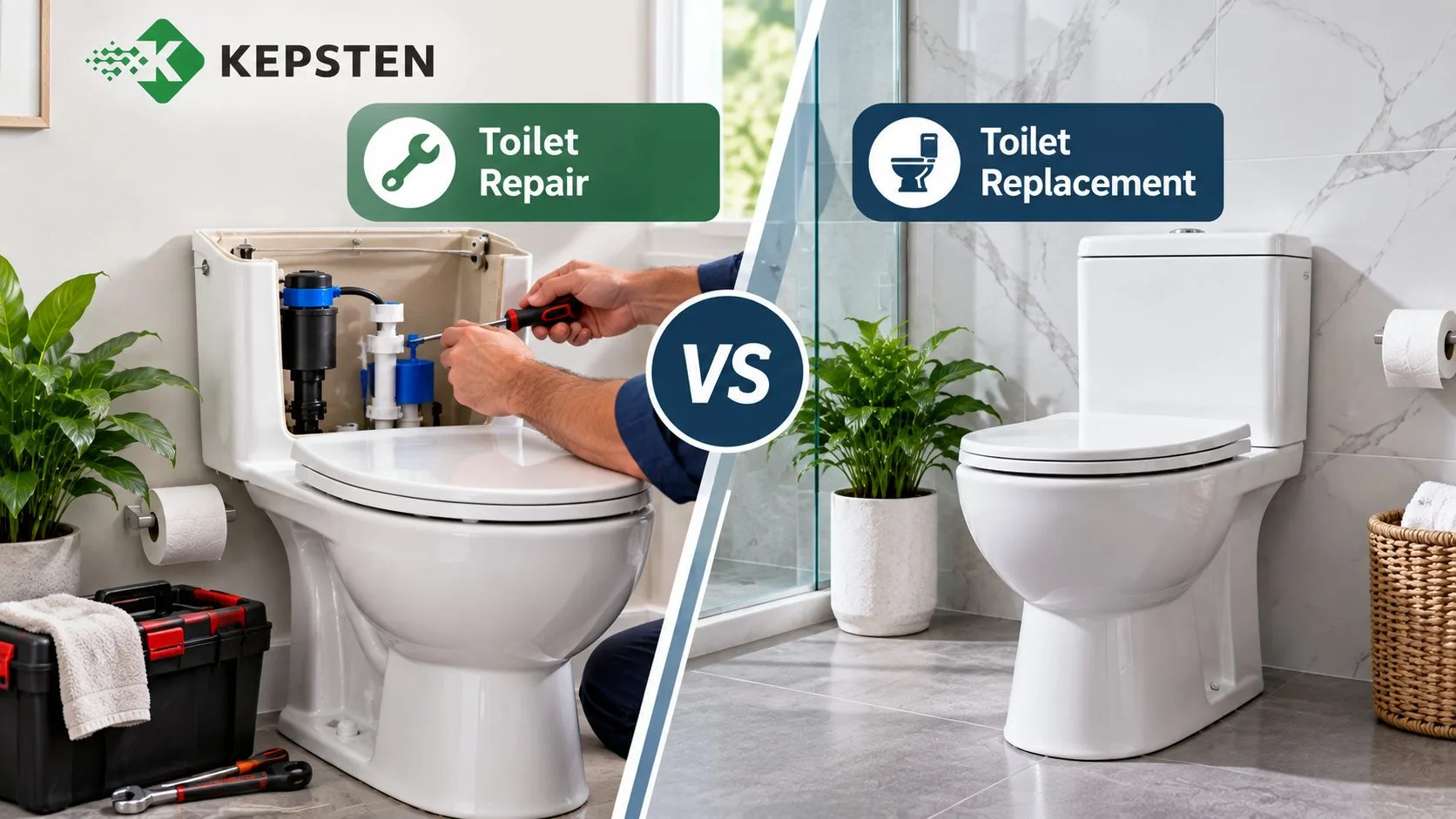
The right choice depends largely on the type of problem.
| Toilet Issue: Usually the Better Option | |
| Constant running | Repair |
| Worn internal component | Repair |
| Weak flush | Repair first. |
| Occasional clog | Repair |
| Repeated clogging | Inspect the underlying cause. |
| Leak caused by a seal | Repair |
| Cracked tank or bowl | Replace |
| Frequent major repairs | Consider replacement. |
| Old and inefficient fixture | Consider replacement. |
| Significant structural damage | Replace |
A toilet that is in good structural condition can often be repaired successfully. Replacement becomes more attractive when the fixture has serious damage, persistent performance issues, or a history of repeated repairs.
What Are the Benefits of Replacing an Old Toilet?
If your existing toilet has reached the point where repairs are no longer practical, a modern replacement can offer several advantages.
Better Water Efficiency
Newer toilets are designed to use water more efficiently while maintaining effective flushing performance. This can help reduce unnecessary water consumption.
Improved Performance
A modern flushing system can provide more consistent operation and may reduce some of the problems associated with aging fixtures.
Less Maintenance
Installing a new toilet eliminates worn internal components and can reduce the need for repeated repairs.
Better Long-Term Value
While replacement involves an upfront cost, it may be more economical in the long run if your existing toilet frequently requires repairs or wastes water.
Updated Appearance
A new toilet can also give your bathroom a cleaner, more modern appearance and improve everyday comfort.
When Is Toilet Replacement the Better Choice?
Replacement is generally worth considering when the toilet has structural damage, continues to cause problems despite repairs, or has become inefficient and expensive to maintain.
Before making a decision, consider:
- The age and condition of the toilet
- The frequency of repairs
- The severity of leaks
- Flushing performance
- Water consumption
- The cost of continued maintenance
A professional inspection can help you determine whether repairing the existing fixture is sufficient or whether a new installation would provide better value.
Why Choose Kepsten?
When you are unsure whether a toilet needs repair or replacement, professional advice can help you avoid unnecessary work and expenses.
At Kepsten, our plumbing team can assess the condition of your toilet, identify the source of the problem, and recommend an appropriate solution.
Our services include:
- Toilet repairs
- Toilet replacement and installation
- Running toilet repairs
- Leak troubleshooting
- Flush performance issues
- Clogged toilet solutions
- Bathroom plumbing services
Whether the issue can be resolved with a small repair or requires a complete replacement, we focus on finding a practical solution for your property.
Final Thoughts
A faulty toilet should not be ignored simply because it still works. Running water, recurring clogs, weak flushing, leaks, and visible damage can all be signs that something needs attention.
Understanding toilet repair vs. replacement can help you make a more informed decision. Minor problems are often repairable, while cracked fixtures, repeated failures, and significant damage may make replacement the better option.
If you are unsure about the condition of your toilet, a professional inspection can help you understand the problem and determine the most suitable next step. With the right solution, you can improve your bathroom's reliability, reduce water waste, and avoid preventable plumbing damage.